DOOH Marketing
Put your consumer brand on the corner your customers already turn
A B2C-specific DOOH playbook: retail trade-area saturation, launch-week flights, market expansion, event surround, in-store retail media, and always-on brand fame — planned around the shopper's day, not the rate card.
The B2C Case for Out-of-Home
Consumer brands buy DOOH because the purchase decision is still made outside the home — and the digital feed cannot follow the shopper into the trade area.
Consumers spend roughly 70% of their waking hours outside the home. That is the addressable window for a consumer brand — and it is exactly the window that digital-feed media cannot reach with any scale. The supermarket aisle, the bar after work, the bus shelter on the school-pickup loop, the gas pump on the way to the ballgame — these are the moments where a brand becomes a habit instead of an impression.
Digital out-of-home gives consumer-brand marketers what the feed never will: a public, photographable, shareable artifact tied to a specific zip code, daypart, and shopper segment. Modern audience, geo, and venue-type targeting now layers like programmatic display, and delivery-based retargeting closes the loop from screen impression to mobile follow-up to store visit. The channel has moved on from a six-week RFP; this page is what that looks like in practice.
The Numbers Behind the Consumer Buy
Of consumers' waking hours are spent away from home — the addressable window for B2C brands
Source: Nielsen / OAAA ↗Of OOH viewers have taken an action because of an out-of-home ad in the last 60 days
Source: OAAA / Harris Poll 2023 ↗Online activity lift per dollar versus other paid media for brands that add OOH
Source: Benchmarketing / OAAA ↗Increase in mobile and search activity attributable to a parallel OOH flight
Source: Nielsen OOH Online Activation Survey ↗Why Consumer Brands Are Moving Budget Into DOOH
Four problems every consumer-brand CMO recognizes — and the screen plan that solves each one.
Be where the purchase decision actually happens
Consumer purchase intent forms in the car, on the sidewalk, in the checkout line, and at the bar — not in a banner-ad placement. DOOH owns the geography between intent and conversion: the trade-area drive, the storefront approach, the in-aisle moment.
Build brand fame digital media can't manufacture
A bus wrap, a Times Square spectacular, or a wild-posting wall in Wicker Park is a public artifact. Consumers photograph it, share it, and treat it as social proof that the brand has scale. No social-feed placement produces that 'I see them everywhere' compound effect.
Drive foot traffic that maps to a transaction
Modern DOOH measurement compares store visits in the markets where DOOH media ran with matched control markets, through aggregate store-visit tests arranged at cost for larger flights. Visit-lift studies and basket-level matchback are now the same operational rigor B2C planners expect from CTV.
Launch in days, not the agency's six-week RFP
Programmatic DOOH lights up in as little as 24 hours after approval. A seasonal push, a retail-opening surround, a tour-date drop, a PR moment — the channel finally moves at the speed of a consumer brand's product calendar.
The B2C DOOH Playbook
Six consumer-brand DOOH plays — each with a real campaign in market behind it.
Retail trade-area domination
Geofence a 1–3 mile radius around every store, then layer venue-type curation — c-stores, gyms, grocery aisles, bus shelters on the commute home — so a shopper sees the brand three to five times before the storefront comes into view. This is how a regional QSR steals share from a chain with ten times the media budget.
- ▸Per-store radius and POI fencing across the full footprint
- ▸Venue-type curation to match the shopper's day
- ▸Foot-traffic lift measured against unexposed control trade areas
Product launch + seasonal flight
Pin a single creative window to the moment that matters: Memorial Day drop, holiday shopping corridor, festival weekend, back-to-school week. We pre-plan the screen list, lock airport and transit assets six to eight weeks out, and activate the programmatic layer to surge frequency when the press cycle hits.
- ▸Calendar-driven flighting with daypart pulsing
- ▸Premium static + programmatic digital stacked on the same plan
- ▸Built-in social amplification with capture-ready creative
Market expansion into new metros
Entering Austin, Charlotte, Toronto, or a DMA where the brand has zero awareness? OOH plants the flag before the first store opens. We map where the target audience already concentrates using POI and CBG-segment data, then surround those clusters with high-impression formats for 6–12 weeks of paid familiarity.
- ▸Audience-cluster mapping before any inventory is selected
- ▸Wild postings, urban panels, transit, and digital billboard mix
- ▸Repeatable per-market playbook for portfolio rollout
Event, tour, and experiential surround
Festivals, sports moments, parades, ticketed tours, and PR stunts all happen in a defined geofence on a defined weekend. We dominate the corridors between the venue, the hotel block, the rideshare-top inventory, and the post-event watering holes — without paying the event's official sponsorship tariff.
- ▸Sunday-to-Sunday event-week activation windows
- ▸Hotel-to-venue panel inventory + airport arrivals
- ▸Live creative swaps tied to scoreboard, weather, or set list
Retail-media in the store the brand doesn't own
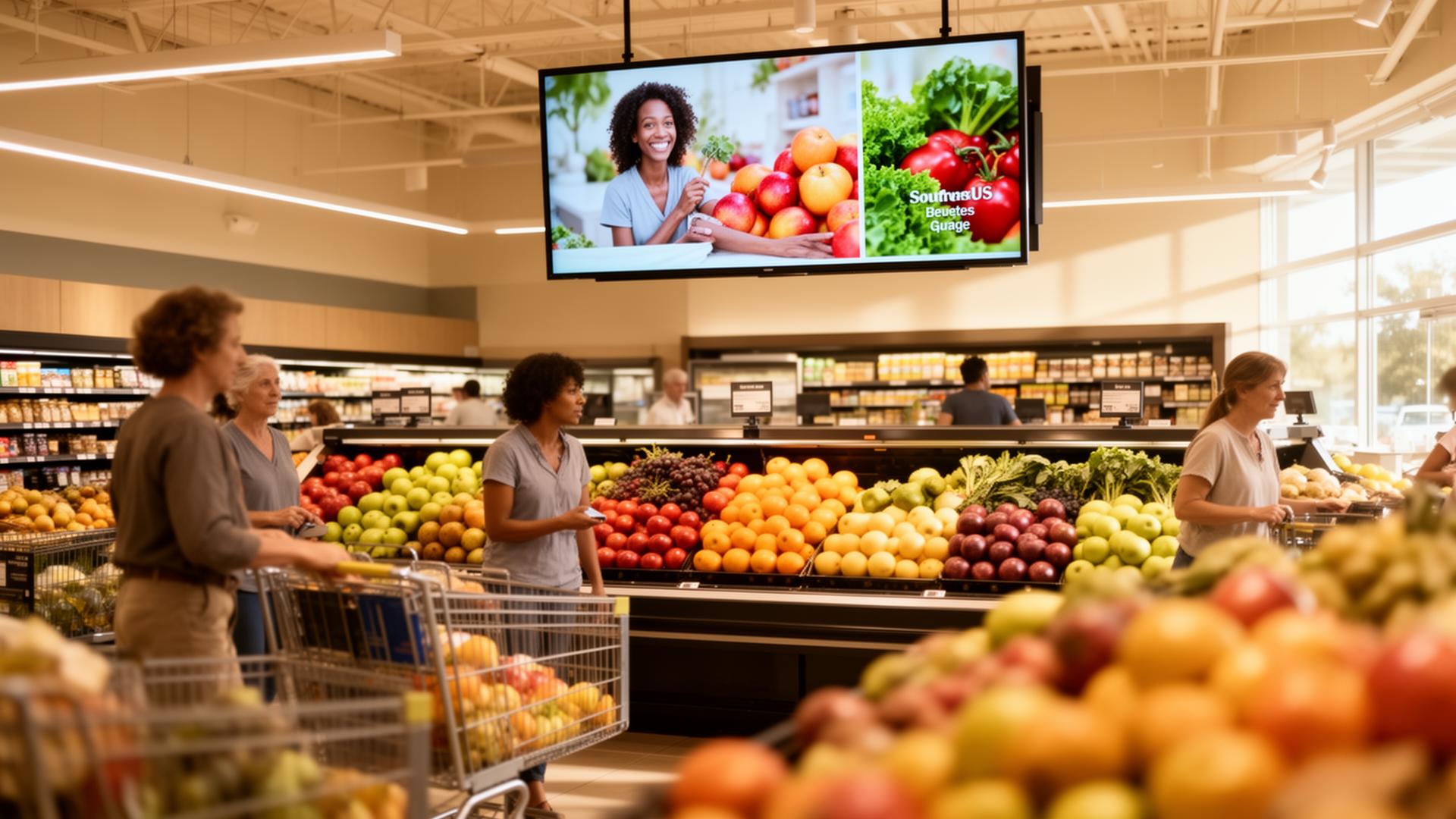
If the brand sells through Publix, Kroger, 7-Eleven, or a national bar/restaurant network, the in-venue screen is the last impression before purchase. DOOH retail-media inventory now extends from the storefront sidewalk to the checkout-line digital endcap — the same audience, three feet from the SKU.
- ▸Storefront, aisle, and checkout-screen inventory by retailer
- ▸Co-op-friendly creative that satisfies retailer brand guidelines
- ▸Basket-level lift studies via retailer loyalty data partners
Always-on brand fame + omnichannel retargeting
DOOH delivery becomes the top of a retargeting funnel: tight geofences around the screens that delivered flow into the mobile and CTV DSP for follow-up frequency. The result is a sustained 60/40 brand-to-activation split that compounds memory structures the way modern brand-effectiveness research demands.
- ▸Place-based geofence audience push to mobile, CTV, and YouTube
- ▸Brand-search lift and direct-traffic measurement by market
- ▸Sustained always-on layer beneath promotional bursts
Real Consumer-Brand Campaigns in Market
Photography from B2C plans we've actually shipped.
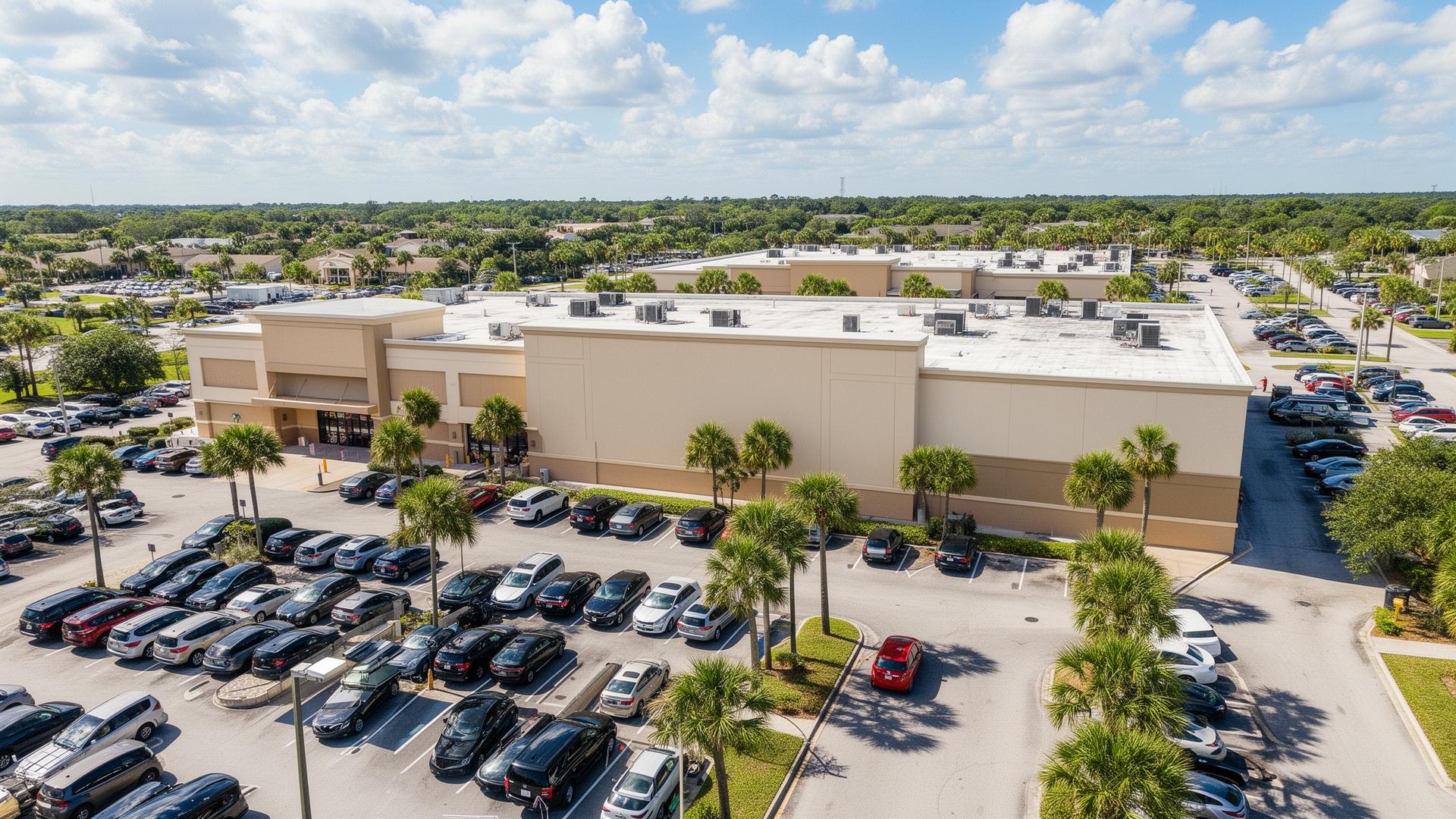
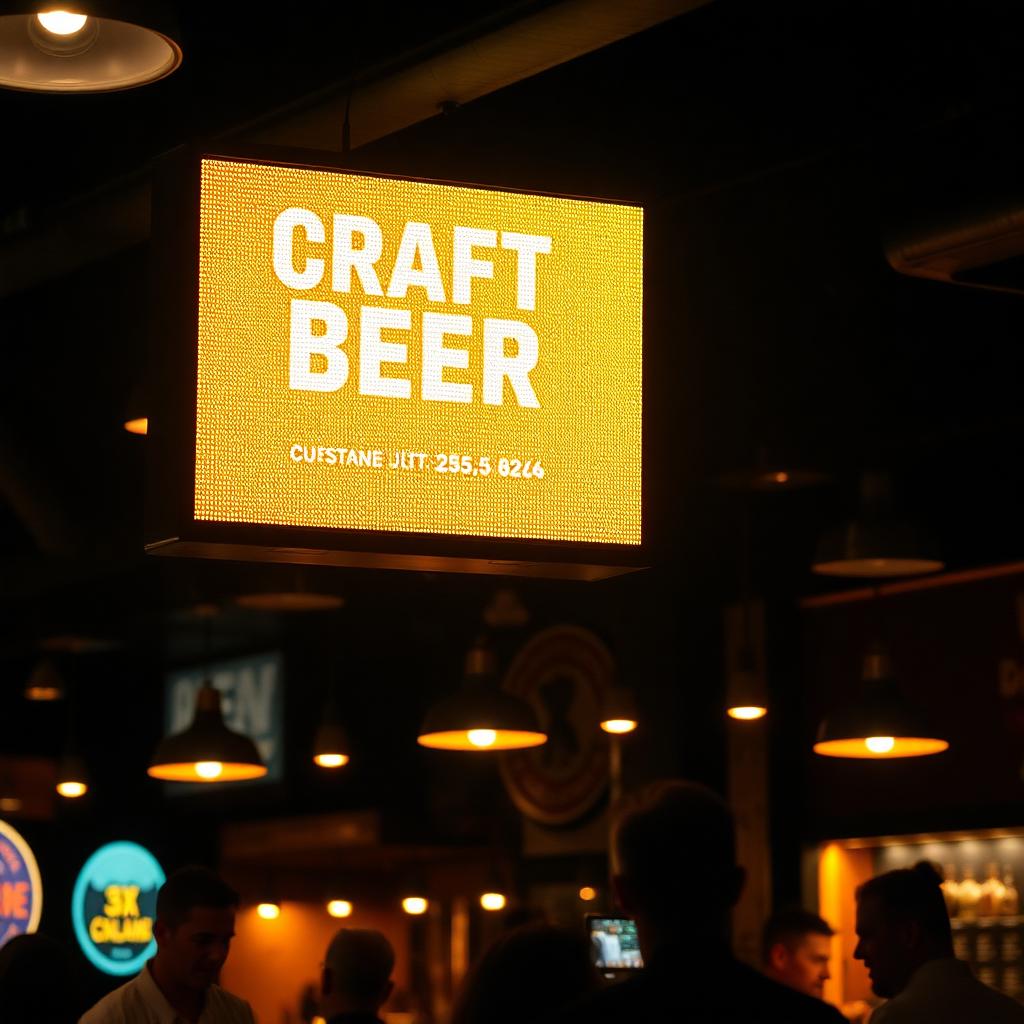
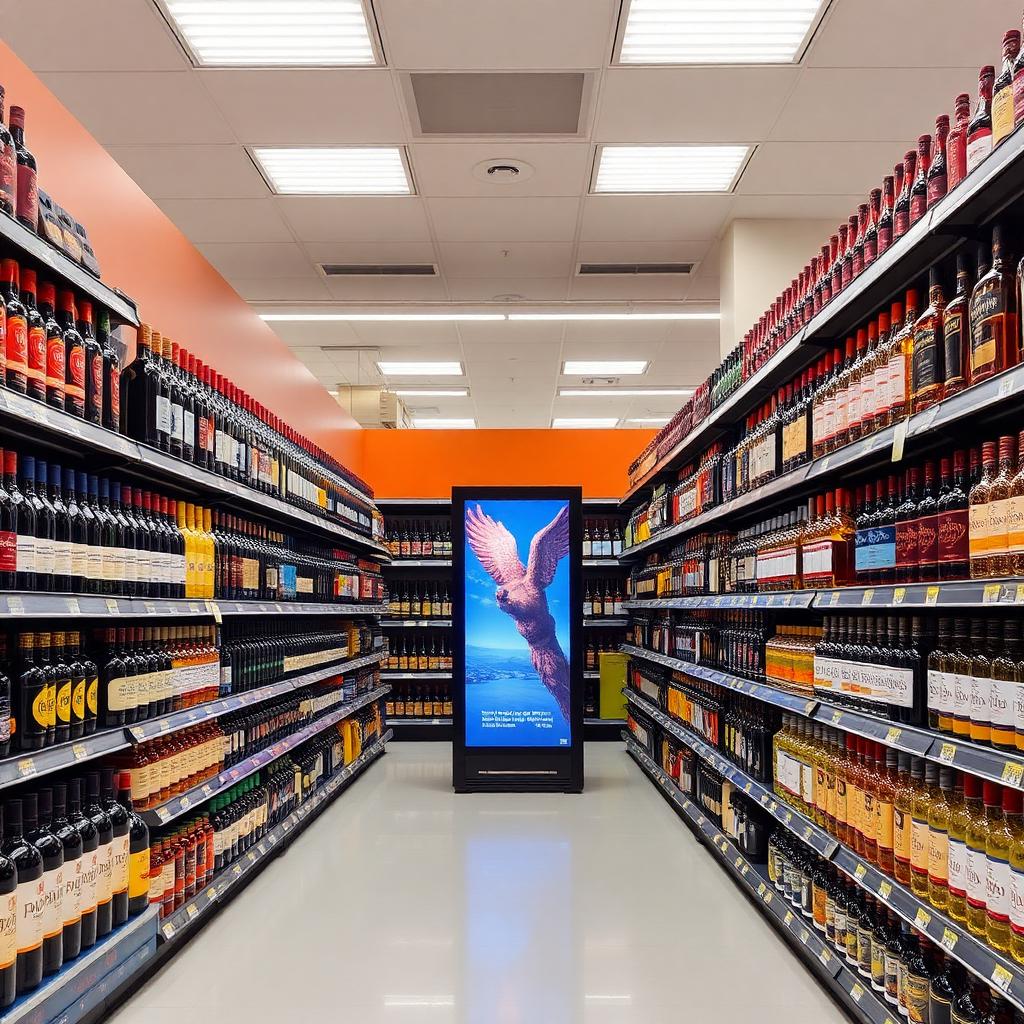
Kodiak Cakes across Sacramento, San Diego, and Wilkes-Barre. Publix in-store and storefront DOOH. On-premise bar screens and liquor-store endcaps for spirits brands. Every image is a real placement from a Goldfish Ads–planned campaign — none of it is stock.


Powered by the Goldfish Ads MCP
The same planning engine our team uses — every screen, every audience, every venue type, on demand.
The Goldfish Ads Model Context Protocol server exposes the live DOOH inventory graph directly to AI agents and planning tools. That means a B2C brief — "wrap every Whole Foods trade area in the Carolinas with bus shelters and gym-network screens for the three weeks before Memorial Day" — turns into a real, priced, in-market campaign in minutes instead of a multi-week RFP cycle.
Live inventory
Publishers, venue types, slot dimensions, programmatic platforms, and POI brand/category data — all queried in real time, not from a stale catalog.
Audience-first
Census-block-group segments, demographic clusters, and behavior cohorts mapped to addressable screens so the audience leads the inventory pick, not the other way around.
Plan → in-market
Plans created through the MCP become live campaign codes with delivery maps, ad specs, and verified inventory counts — no manual re-keying anywhere in the workflow.
Internal Link Map
Every DOOH hub a consumer-brand planner uses, organized.
One place to jump from this page into the foundations, targeting methods, measurement layer, venue inventory, geographies, verticals, and shipped consumer-brand case studies.
Cited Research
Where the consumer-brand numbers on this page come from.
- OAAA — OOH Industry Fact Sheet · 70% out-of-home dwell, channel definitions, format taxonomy
- OAAA / Harris Poll — OOH Consumer Behavior · 82% action-after-exposure stat
- Benchmarketing & Nielsen — OOH Online Activation · 5.7× online-activity lift, 46% mobile/search lift
- Les Binet & Peter Field — The Long and the Short of It · 60/40 brand-vs-activation framework for consumer brands
Consumer-Brand Marketer FAQ
What we get asked on every B2C intro call.
How is B2C DOOH measured beyond impressions?
Three layers stack on every consumer plan: (1) verified delivery (the screen ran the spot, time-stamped); (2) audience reach against the target segment using AMAP census-block-group cohorts; (3) outcome — brand-search and direct-traffic lift in exposed versus matched control markets, included, plus foot-traffic lift and basket lift via retailer data, arranged at cost for larger flights. We report a delivery heatmap on every flight; lift is modeled and labeled that way.
What does a consumer-brand DOOH campaign actually cost?
For programmatic digital flights, a readable test usually needs about $5–10K per market per month, and there is no minimum to start. A single iconic spectacular (Times Square, Sunset Strip) can run $40–250K for a four-week buy. National multi-market flights that mix premium static with programmatic digital typically scope from $75K to $1M+ depending on format mix and flight length. We scope to outcome targets, not impressions purchased.
How fast can a B2C brand launch?
Programmatic and digital-billboard inventory: as little as 24 hours after approval. Premium static (printed bulletins, transit wraps, wild postings): 3–6 weeks. Tour, event, or holiday-window plans should be locked 6–8 weeks ahead for premium placements; remnant and programmatic inventory remains addressable inside that window.
Does DOOH work for DTC brands that don't have physical stores?
Yes — DTC plays differently. The objective shifts from foot traffic to brand-search lift, direct-traffic lift, and CAC reduction inside paid social and search. DOOH delivery becomes a top-of-funnel audience source for the omnichannel DSP, and the lift typically shows up first in branded-search volume within 7–14 days of flight start.
How is this different from a big agency's OOH practice?
A traditional OOH agency books inventory across separate vendor RFPs and reconciles billing weeks after the campaign. Our approach uses the Goldfish Ads planning platform: one screen list, one set of pricing, one delivery feed, one measurement layer. Planners get the same self-serve view we use, which collapses the time from brief to in-market by an order of magnitude.
Keep Reading
B2B Marketing on DOOH
The account-based, conference-week, pipeline-air-cover counterpart for enterprise brands.
DOOH Retargeting
Turn DOOH delivery into addressable audiences for mobile, CTV, and search.
All Case Studies
Every consumer-brand play we've executed, by vertical and by market.
Build a B2C Plan Around Your Trade Areas
Send us your store list, your launch calendar, or your festival lineup. We'll come back with a screen plan, a delivery heatmap, and a budget that ties to foot traffic — not just impressions.
Contact Us Now